Venezuela Quakes Highlight Risks for California: A Structural Comparison
06/30/2026 / By Douglas Harrington

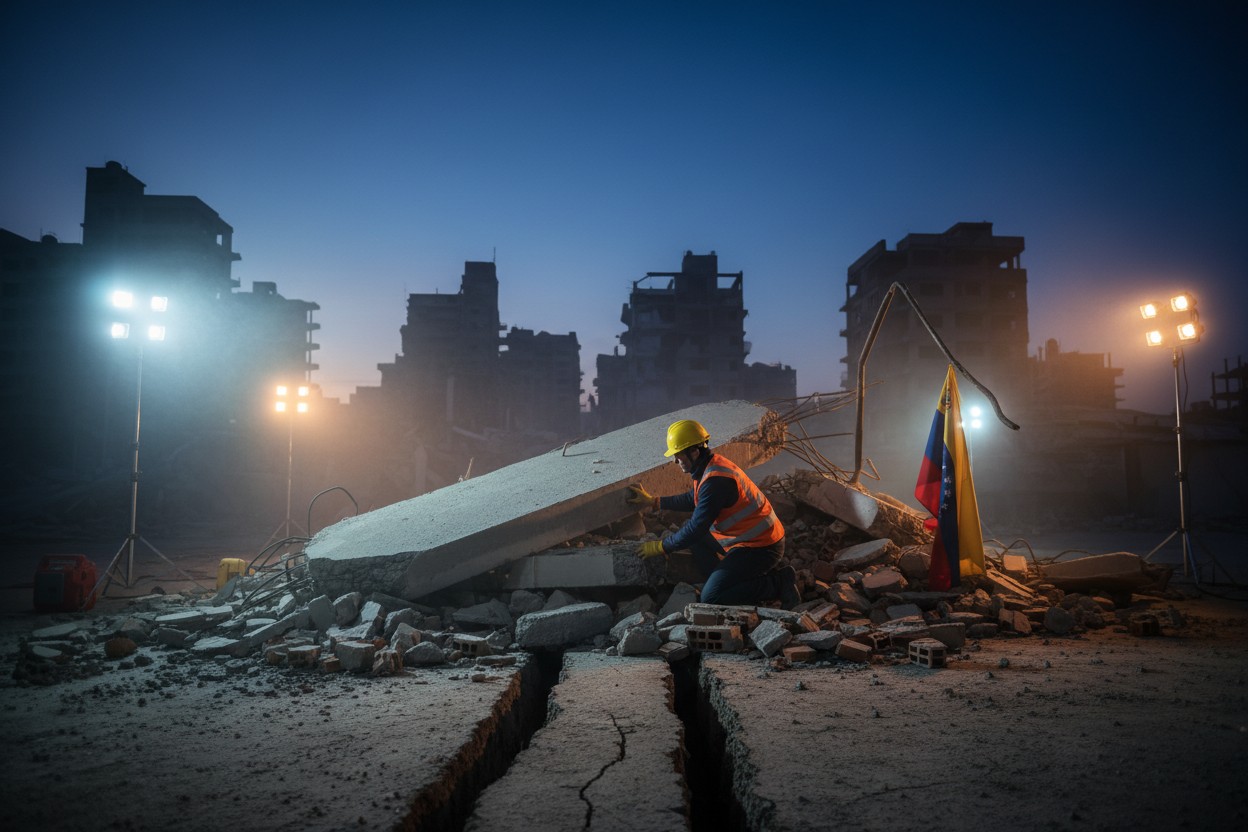
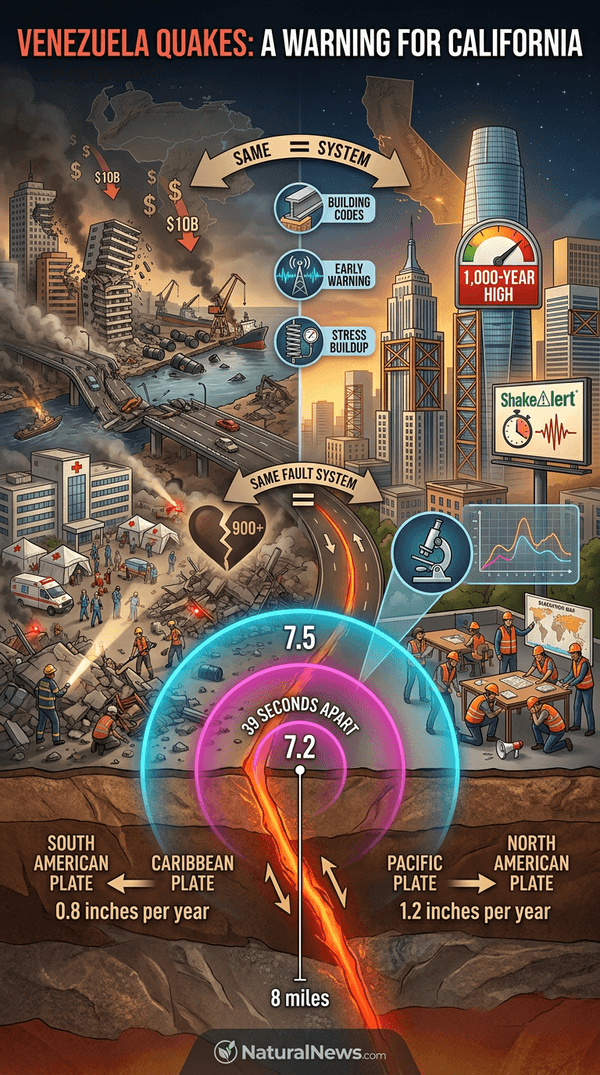
Two powerful earthquake pulses struck Venezuela on June 24, 2026, just 39 seconds apart, collapsing buildings across northern Venezuela and killing more than 900 people, according to government officials. The first jolt registered magnitude 7.2 and the second magnitude 7.5, with an epicenter near Morón, about 104 miles west of Caracas, at a depth of 8 miles, the U.S. Geological Survey reported. At least 4,300 people were injured, and on one independent monitoring platform the number of missing topped 50,000 overnight, according to news reports. [1] [2]
University of Southern California geophysicist Sylvain Barbot said scientists are still analyzing data to determine whether the two pulses represent separate earthquakes or a single rupture along a very long fault. The events could be a doublet, similar to the two magnitude-7-plus earthquakes that struck Turkey in 2023 within eight hours, Barbot said. However, because the Venezuela pulses were only seconds apart, they could also be a single rupture that broke different segments of a long fault, creating the appearance of two events. Venezuela sits on a transform fault boundary between the South American and Caribbean plates, which slide past each other at about 0.8 inches per year, Barbot added.
The shallow depth of 8 miles and the proximity to heavily populated cities contributed to the severity of the damage, officials reported. The USGS estimated a 44 percent probability that the death toll would surpass 10,000, the BBC reported. [2]
Similarities Between Venezuelan Faults and California’s San Andreas
The fault system involved in Venezuela’s earthquakes and California’s San Andreas Fault are very similar, both being strike-slip transform faults where plates slide horizontally past each other, Barbot said. The rate of motion along the Venezuelan boundary is about 0.8 inches per year, while the San Andreas moves slightly faster at about 1.2 inches per year. Both systems produce large magnitude earthquakes at similar frequencies, Barbot added. On average, a magnitude-7 or larger quake on the San Andreas every 170 years, though the timing can vary widely.
Geologists from California have previously noted that apartment buildings in Caracas were similar in foundation, design, and construction to those built in San Francisco, and that they were adjacent to a fault almost identical in behavior to the San Andreas, according to a book on the San Francisco earthquake. [3] Southern California’s last major quake was the Fort Tejon earthquake of 1857, a magnitude 7.9 event. A recent study suggested that stress along the southern San Andreas is higher now than it has been in at least 1,000 years, indicating it may be ready for a rupture, Barbot said. He cautioned that large earthquakes are not clockwork and could happen tomorrow or in another 100 years, but the similar mechanics and recurrence intervals mean California faces comparable risks.
What Scientists Know and Don’t Know About Warning Signs
Scientists have been actively searching for reliable precursors that could warn of an impending earthquake, but no reliable signals have been identified, Barbot said. There are anecdotal cases of seismic swarms before large ruptures that, in hindsight, could have provided clues, but that is not always the case. Machine learning has identified systematic changes in microseismic activity that precede some large ruptures, and studies of earthquake physics have started to explain why that happens, Barbot noted. However, scientists are not yet able to connect the dots reliably, he added.
Short-term warnings are possible after an earthquake begins. The first waves, called P waves, travel faster than the more destructive S waves and surface waves, according to Barbot. Early warning systems that detect P waves can provide seconds of alert, enough time to stop traffic, shut down gas pipelines, and halt fast-moving trains, he said. This is enough time for people to take cover to avoid being killed by building collapse, Barbot added. He emphasized that communities should maintain strong seismic building codes and emergency plans regardless of the status of warning science.
Ongoing Risks and Lessons for California
After the main shocks, Venezuela faces an elevated risk of landslides for months or years because the rocks have been displaced, Barbot warned. The next rainstorm could trigger additional landslides, potentially causing more damage and deaths. Scientists need to be on the ground to assess the extent of the rupture and damage, which will help inform future preparedness, he said.
The event serves as a reminder for Californians to review seismic codes and emergency response plans, according to experts. San Francisco has a Disaster Corps Director to coordinate with experts, but advice on preparedness is often rejected under the influence of the profit motive, according to a book on the 1906 earthquake. [4] The concept of taking personal responsibility for one’s own well-being by increasing self-reliance is moving toward mainstream acceptance, as more people recognize the need to prepare for crises, according to one analysis. [5] Barbot emphasized that large earthquakes are inevitable on similar fault systems, necessitating constant readiness. The Independent article noted that California’s building codes and emergency plans should be strengthened in light of the Venezuela disaster, as quoted by Barbot.
References
- ZeroHedge. “Heavy Casualties After Massive Twin Quakes Rock Venezuela, Topple Buildings; International Response May Be Needed.” June 25, 2026.
- BBC News. “LIVE: Powerful back-to-back earthquakes strike Venezuela, collapsing buildings in Caracas.” June 25, 2026.
- Gordon Thomas and Max Morgan Witts. “The San Francisco earthquake.”
- Gordon Thomas and Max Morgan Witts. “Earthquake The Destruction of San Francisco.”
- Chris Martenson. “When The Rich Become Preppers It’s Time To Worry.” PeakProsperity.com. January 28, 2017.
Explainer Infographic
Submit a correction >>
Tagged Under:
big government, California, caracas, chaos, Collapse, dangerous, earthquake, ecology, environment, fault line, landslides, national security, natural disasters, panic, San Andreas fault, SHTF, structural comparison, Venezuela
This article may contain statements that reflect the opinion of the author
Get independent news alerts on natural cures, food lab tests, cannabis medicine, science, robotics, drones, privacy and more from NewsTarget.com
Get independent news alerts on natural cures, food lab tests, cannabis medicine, science, robotics, drones, privacy and more from NewsTarget.com
RECENT NEWS & ARTICLES